



Game 6 moments define NHL playoff legacies, and the 2026 Stanley Cup Final delivered exactly that when the Carolina Hurricanes clinched their championship with a shutout victory over the Vegas Golden Knights on June 15. The series-clinching performance capped a dramatic back-and-forth battle that showcased everything hockey fans crave: overtime heroics, defensive masterclasses, and momentum swings that kept bettors and analysts guessing until the final horn.
For Canadian sports enthusiasts tracking playoff trends, this year’s Cup Final offered a masterclass in Game 6 pressure. The Hurricanes’ championship run featured three games decided by a single goal, two overtime thrillers, and performances that will shape how we evaluate clutch players heading into the 2026-27 season. Understanding what separates winning Game 6 efforts from crushing defeats matters whether you’re analyzing futures markets, breaking down playoff hockey for your fantasy league, or simply appreciating the razor-thin margins that separate champions from also-rans. With the regular season set to begin September 29 featuring an expanded 84-game schedule for the first time since 1993-94, the lessons from these high-stakes elimination games provide the blueprint for identifying which teams can handle postseason intensity when it counts most.
What Happened: Game 6 Stanley Cup Clincher
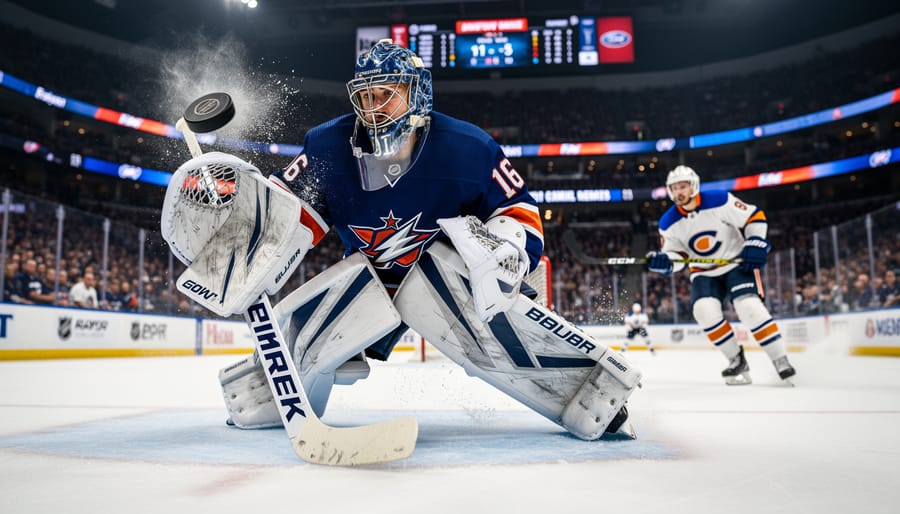
The Carolina Hurricanes captured the Stanley Cup on June 15, 2026, delivering a dominant shutout performance in Game 6 to close out the Vegas Golden Knights. The decisive victory came on enemy ice, silencing the T-Mobile Arena crowd and ending the series at four games to two. Carolina’s goaltender stood tall when it mattered most, denying every Vegas attempt and cementing the franchise’s second championship in team history.
The shutout carried immense symbolic weight beyond the final score. Clinching games traditionally belong to offenses and overtime heroes, yet Carolina leaned on defensive discipline and flawless goaltending to raise Stanley Cup in Vegas. That strategic identity reflected the team’s entire playoff run, a methodical approach that frustrated high-powered attacks throughout the postseason.
Vegas entered Game 6 with home advantage and the pressure of elimination, factors that typically fuel desperate rallies. Instead, the Hurricanes controlled tempo from the opening faceoff, managing the clock and limiting quality scoring chances. Carolina’s depth players contributed timely offense while the defensive core absorbed Vegas’ physical pushback without retaliating or losing composure.
The championship-clinching performance validated Carolina’s patient buildup through the series. After trading momentum swings in Games 1 through 5, the Hurricanes executed a textbook road closeout. For Vegas, the loss marked a bitter end to a promising championship defense attempt. For Carolina, the shutout became the defining image of a title built on team defence and mental toughness under the highest stakes.

Key Developments Throughout the 2026 Cup Final Series
1. Game 1: Golden Knights Take Early Lead
The 2026 Stanley Cup Final opened with the Vegas Golden Knights seizing home-ice advantage and drawing first blood in the series. Playing before their home crowd, the Golden Knights controlled the tempo and secured a victory that set the tone for what would become a hard-fought six-game championship battle.
The opening win demonstrated Vegas’s ability to execute their game plan under pressure, leveraging their playoff experience to navigate the high-stakes environment of a Cup Final opener. That initial success put the Hurricanes in a must-respond position heading into Game 2, raising questions about whether Carolina could overcome the early deficit against a confident Golden Knights squad that had just proven they could dictate play on hockey’s biggest stage.
2. Game 2: Jarvis Overtime Heroics Even the Series (June 5)
After dropping the opener, the Hurricanes needed a response to avoid falling into a dangerous 2-0 hole. Seth Jarvis delivered exactly that on June 5, 2026, burying the Jarvis overtime winner that sent the crowd into a frenzy and brought the series back to level terms at 1-1.
The goal itself was pure instinct. Jarvis collected a loose puck in the offensive zone, surveyed his options for a split second, and fired a shot that beat the Golden Knights netminder cleanly. No tap-in, no deflection, just a player rising to the moment when his team needed it most.
What made this strike so significant wasn’t just the two points in the standings. Overtime winners in the Stanley Cup Final carry psychological weight. The Hurricanes had just proven they could match Vegas in a tight, physical battle and come out on top when the margin for error disappears. For bettors tracking series momentum, Game 2 overtime results often signal which team has the mental edge to grind through a long series. This one told you the Final was far from over.
3. Game 3: Golden Knights’ Double-Overtime Comeback (June 7)
Game 3 shifted the series momentum back to Vegas on June 7 when the Golden Knights outlasted the Hurricanes in double overtime. After splitting the first two games in Raleigh, both teams knew Game 3 represented a critical pivot point, whoever grabbed the 2-1 advantage would control the psychological edge heading into the middle stretch of the Final.
The game became a war of attrition. Regulation ended deadlocked, forcing the first overtime period where goalies on both sides made sprawling saves. Neither team could break through. As the second overtime wore on, fatigue started dictating play. Defensive zone breakdowns became more common, and power moves to the net replaced intricate passing sequences.
Vegas capitalized on one such breakdown. The Golden Knights’ persistence in double overtime demonstrated the kind of resilience that makes or breaks championship runs. For Carolina, dropping a marathon home game meant facing genuine adversity for the first time in the series. The loss tested their championship mettle and set up a must-respond scenario in Game 4.
Double-overtime playoff games create folklore moments precisely because they expose which players can perform when legs are heavy and margins razor-thin. Game 3 reminded everyone that no lead in a Cup Final is safe, and no team can afford a mental lapse when elimination scenarios loom just games away.
4. Game 4: Staal’s Two-Goal Performance Levels the Final (June 10)
Game 4 arrived with the Stanley Cup Final knotted at two games apiece, and Jordan Staal delivered when the Hurricanes needed him most. On June 10, 2026, the veteran center scored twice to propel Carolina past Vegas and even the series at 2-2, turning what could have been a deficit into a fresh start.
Staal’s performance showcased exactly why teams value experienced players in elimination-adjacent scenarios. His first goal shifted momentum early, settling nerves after the Golden Knights had seized control with their double-overtime thriller in Game 3. The second strike effectively sealed the outcome, giving Carolina breathing room and forcing Vegas to recalibrate their approach.
This wasn’t flashy highlight-reel hockey. Staal played to his strengths, positioning, timing, and an uncanny ability to capitalize when defensive attention drifted elsewhere. For bettors tracking player props and series outcomes, performances like this underscore why veteran leadership becomes a tangible statistical factor in tight playoff series. One player refusing to fold can shift an entire championship trajectory, and Staal’s two-goal night did exactly that, setting the stage for the Hurricanes to reclaim home-ice advantage in Game 5.
5. Game 5: Hurricanes Move Within One Win (June 12)
On June 12, 2026, the Hurricanes held off the Golden Knights to take a commanding 3-2 series lead, putting themselves one victory away from the franchise’s second Stanley Cup championship. The win shifted the entire dynamic of the final, transforming Game 6 from a potential tie-breaker into an elimination scenario where the Golden Knights would face championship-or-bust pressure.
Game 5 victories carry enormous psychological weight in a playoff series. The team leading 3-2 gains home-ice advantage for the clincher and the luxury of a second chance if needed, while the trailing team must win or watch their season end. For the Hurricanes, this meant controlling their own destiny heading into Game 6. For Vegas, it meant facing the reality that one more loss would end their championship hopes.
The Hurricanes’ ability to close out tight games throughout the series, demonstrated in Jarvis’s overtime heroics and Staal’s clutch performances, suggested they had the composure to finish the job. Their defensive structure and goaltending had proven capable of protecting leads under pressure, exactly the formula needed to seal a title on home ice three days later.
Why Game 6 Incidents and Player Performance Matter

Game 6 scenarios represent the convergence of athletic skill, psychological pressure, and strategic calculation at their most intense. When one team skates to close out a series and the other fights to stay alive, every shift carries championship weight. The 2026 Stanley Cup Final demonstrated this perfectly, after the Hurricanes took a 3-2 series lead on June 12, the Golden Knights faced elimination while Carolina had a chance to hoist the Cup on home ice.
The mental stakes shift dramatically compared to regular season play. Players who thrive under pressure separate themselves from those who fold. Jarvis’s overtime winner in Game 2 and Staal’s two-goal performance in Game 4 weren’t just good games, they were statements about composure when the margin for error disappears. The team facing elimination often plays with desperate intensity, while the team on the brink of victory must manage nerves and avoid overconfidence.
Several factors make Game 6 situations uniquely compelling:
- Elimination pressure forces teams to deploy their best players for extended minutes, leading to both heroic performances and costly mistakes
- Coaching staffs exhaust their playbook of tactical adjustments, creating unpredictable game flow
- The physical toll of an extended series accumulates, testing conditioning and revealing which players have reserves left
- Momentum swings carry amplified psychological impact as teams process the reality of championship-or-nothing stakes
- The betting implications multiply as oddsmakers factor in desperation, home ice advantage, and fatigue variables
For bettors, these variables create both opportunity and risk. Understanding how teams historically perform in elimination games, tracking player ice time throughout a series, and learning to master sports headlines around lineup changes or injury updates becomes crucial. The Hurricanes’ Game 6 shutout on June 15 rewarded those who recognized their defensive structure had tightened throughout the series, stifling Golden Knights scoring chances when it mattered most.
Player Incidents That Defined the 2026 Cup Final
Championships aren’t won by rosters alone, they’re secured through individual performances in moments when everything is on the line. The 2026 Stanley Cup Final illustrated how player contributions compound across a series, with specific incidents at crucial junctures ultimately determining who lifts the Cup.
Seth Jarvis set the tone in Game 2 with his overtime winner on June 5, evening the series at 1-1 and proving the Hurricanes could match the Golden Knights in clutch situations. That moment shifted momentum and established a pattern: when elimination loomed or leads needed protecting, specific players stepped forward.
Jordan Staal’s veteran leadership became critical in Game 4 on June 10. His two-goal performance leveled the series at 2-2, demonstrating how experienced players deliver in high-pressure scenarios. Staal’s ability to control both offensive chances and defensive responsibilities gave Carolina the stability needed to withstand Vegas’s surges throughout the series.
The cumulative effect of these contributions set the stage for the Game 6 shutout on June 15. While goaltending sealed the championship, it was the scoring depth and defensive structure built through earlier individual efforts that allowed Carolina to close out the series. These types of performances create career-defining outcomes and shape what to watch next as players establish themselves as clutch performers who thrive when the stakes are highest.
What to Watch: Looking Ahead to the 2026-27 NHL Season
The Hurricanes’ championship run offers a blueprint for success that contenders will study throughout the summer. Their ability to deliver in Game 6 elimination scenarios, both defending against them and capitalizing when they had the chance, demonstrates the mental fortitude championship teams need. Expect Carolina to enter 2026-27 as favourites, but the Golden Knights’ competitive series performance suggests they’ll remain dangerous after retooling.
The 84-game regular season beginning September 29, 2026 brings added depth to scheduling. Teams face more games against divisional rivals, which means potential playoff rematches happen multiple times during the regular season. The Hurricanes-Golden Knights series in October and February will draw massive betting action as fans look for revenge narratives and early indicators of postseason form.
Watch how the players who starred in these Game 6 moments carry their success forward. Jarvis proved he can handle overtime pressure in the biggest moments. Staal showed veteran scoring touch when it mattered most. These performances create market value, expect their point totals and related prop bets to reflect elevated expectations.
When does the 2026-27 NHL season start?
The regular season begins September 29, 2026, marking the earliest start in recent NHL history.
How many games are in the new schedule?
Teams will play 84 regular season games, the first time this format has been used since 1993-94.
What makes Game 6 scenarios so compelling for bettors?
Elimination pressure creates unpredictable performances and tight betting lines, as teams either rise to the moment or crumble under the weight of championship expectations.
Should I bet on Hurricanes futures for 2026-27?
Championship teams typically see inflated odds early, but Carolina’s proven Game 6 composure and core roster continuity make them legitimate contenders despite shorter prices.
For Canadian bettors, tracking these storylines early provides an edge. Teams that succeeded in high-pressure Game 6 situations often carry that confidence through the following season, while those that fell short frequently overcompensate in free agency. The next eight months of roster moves tell you which organizations learned the right lessons from these defining moments.
The 2026 Stanley Cup Final delivered everything that makes Game 6 scenarios the most riveting moments in hockey. From Jarvis’s overtime heroics to Staal’s veteran clutch performance to the championship-clinching shutout on June 15, the series showcased how pressure transforms good players into legends and tight games into unforgettable drama. These weren’t isolated incidents, they were the accumulation of skill, preparation, and mental toughness colliding when the stakes couldn’t be higher.
For fans, these moments create the stories we’ll debate for years. For bettors, they’re reminders that playoff hockey defies predictable patterns, demanding respect for momentum shifts and elimination-game psychology. The Hurricanes’ championship run exemplified why Game 6 remains hockey’s most compelling crucible.
As the 2026-27 season kicks off on September 29 with an expanded 84-game schedule, new storylines will emerge and fresh Game 6 battles will unfold. Stay locked into The Cheap Seats for expert analysis, betting insights, and coverage of every twist throughout the upcoming season. The next unforgettable moment is already on the horizon.